
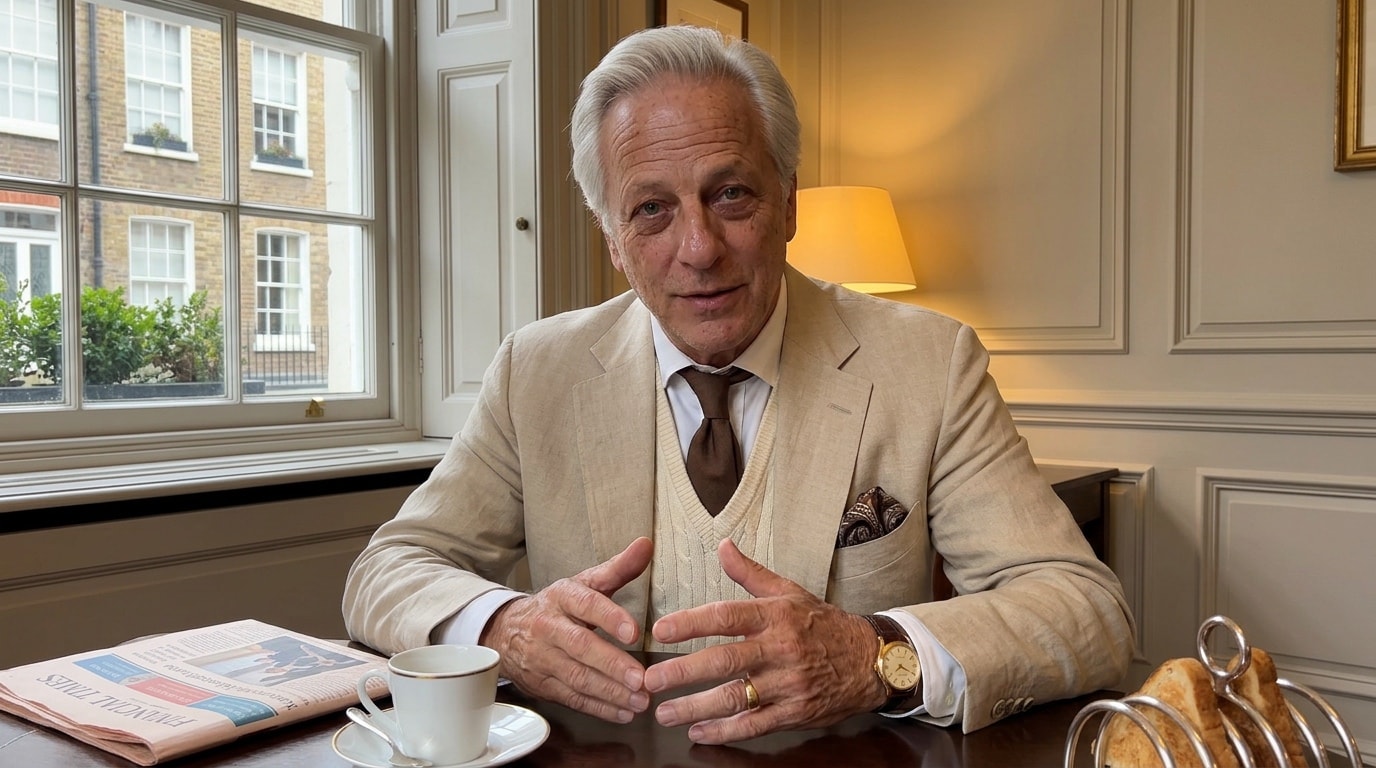
Never announce money. That is the whole aesthetic, and it is not an aesthetic at all — it is a capital-protection strategy that old families have run for two centuries and social media has spent fifteen years teaching everyone to violate.
Quiet wealth is capital nobody can see: assets accumulating in private while the outside of your life stays deliberately ordinary. Rich is loud. Wealth is quiet. This page is the definition, the test that separates the two, and the rules that make quiet wealth work — written for the reader building it from scratch, not the one who inherited it.
What is quiet wealth?
Quiet wealth is a way of holding money in which the money works and the owner does not perform. In practice it looks like this: income above lifestyle, the gap invested monthly into boring assets, a home and car chosen for function, and a strict silence about numbers — salary, portfolio, prices paid.
The word doing the work is quiet, and it means something specific. Not hidden from the tax authority — hidden from the audience. The quietly wealthy still file, still own, still spend. What they do not do is emit signals. A signal has three costs the loud never price in:
- Repricing. The contractor, the dealership, and the wedding venue all quote a different number to a man they believe is rich.
- Requests. Visible money summons borrowers. Every flash of the pile is an invitation to the family loan you will never get back.
- Attention tax. An image, once purchased, must be maintained. The watch demands the car, the car demands the neighborhood. Maintenance of an image is a subscription with no cancel button.
What quiet wealth is not
The phrase has been fashionable lately, which means it has been diluted. Three things it is not:
It is not quiet luxury. Logo-less cashmere at forty times the price of the logo is still an audience purchase — the audience is just smaller and richer. A brand strategy is not a balance sheet.
It is not frugality theater. Driving a rusted car while holding no assets is not quiet wealth; it is loud poverty with good manners. The quiet part only matters if the wealth part is happening — the wedge, the accounts, the system that builds generational wealth.
It is not secrecy from your own family. The quietly wealthy are silent outward and precise inward: spouses know the numbers, heirs learn the code, the will exists. Silence at the dinner party; clarity at the dinner table.
| Looking rich | Quiet wealth |
|---|---|
| Spends to be seen | Invests to be free |
| Announces the watch, the raise, the deal | Announces nothing |
| Income high, ownership thin | Ownership compounding, income irrelevant to strangers |
| Audience decides the purchases | The purchase test decides the purchases |
| Net worth is a performance | Net worth is a number two people know |
The test: would you buy it if nobody could see it?
Every purchase gets one question. If this were invisible to everyone I know, would I still want it? The bed, yes — you sleep in it. The eleventh pair of sneakers, no. That answer is the entire diagnostic: what survives the question is spending; what fails it is signaling.
The tool below prices any purchase the way the quietly wealthy price it — not in dollars, but in months of compounding your capital would have produced on its own.
Loud or quiet: the spend check
Price the thing you are considering against your liquid capital. One number decides the flag: how many months of your pile's own growth this purchase consumes.
This purchase costs about 10.3 months of what your capital earns on its own at an assumed 7% a year. You are not buying an item, you are selling 10.3 months of compounding. That is a loud spend at your current pile.
Estimate only. $50,000 at an assumed 7% a year earns about $292 a month before tax. A purchase under one month of growth is flagged quiet. The threshold is a discipline, not a law.
How do you practice quiet wealth?
Four moves, in order, and none of them requires being wealthy yet:
- Set the wedge and automate it. A fixed share of gross income — ten percent to start, ratcheted up with every raise — leaves for investments on payday, by standing transfer, before you see it. Quiet wealth is built in the gap between earning and spending, and the gap only survives if it is plumbing rather than willpower.
- Run the purchase test on everything visible. Would I still buy this if nobody could ever see it? Ask it at the point of sale, every time. What passes is spending; what fails is signaling, and the signaling budget is where your wedge was hiding all along.
- Go silent on numbers — permanently. Salary, prices paid, portfolio, windfalls: nothing crosses the household wall in either direction. One prepared sentence (“I keep money boring”) retires the topic for life.
- Review once a quarter, not once a day. A calendar entry, four times a year: wedge percentage up if income rose, allocation still boring, one visible expense cancelled. Quiet wealth is maintained on a schedule precisely so it never needs attention in between.
Why old money went quiet in the first place
At a graduation dinner years ago — twelve people, white tablecloth — I watched a man spend ten minutes on his new watch: the waiting list, the allocation game, and finally the number, delivered like a punchline. Across the table sat an older man in a plain steel piece on a worn leather strap who, I knew from elsewhere, could have bought the dealership. He ordered, tipped well, asked the graduate about her plans, and left nothing to discuss. Two years later, when the first man’s business needed capital, everyone from that table knew his margin was thin — he had been reporting it for years, one announced purchase at a time. Volume is the cost of not being trusted.
The estates that survive have a phrase for this: he wears his balance sheet. It is not snobbery — it is a professional observation. The families whose money outlived them were, without exception, the ones nobody could inventory from the street.
The part everyone misses
Quiet is not a personality trait. It is a system requirement. Compounding needs two inputs — capital and time — and visibility attacks both: it drains capital through audience purchases and repricing, and it interrupts time by inviting requests. The signs are readable once you know them — the signs of quiet wealth are mostly absences.
You do not go quiet after you are wealthy. You get wealthy because you went quiet.
Questions people actually ask
Is quiet wealth the same as stealth wealth?
They overlap but are not identical. Stealth wealth usually describes rich people hiding wealth they already have. Quiet wealth is a building method: keeping spending, income, and holdings private from the first dollar, because attention has a price and privacy compounds.
How much money counts as quiet wealth?
There is no threshold. Quiet wealth is a ratio, not a number: assets you own versus signals you emit. A teacher with a paid-off house, an index portfolio, and no audience is quieter — and often wealthier in optionality — than a leased-Lamborghini millionaire.
Why do wealthy people hide their money?
Because visible money changes the prices you are quoted, the requests you receive, and the way people negotiate with you. Old-money families treat financial privacy as maintenance on the asset — the pile that nobody can see is the pile nobody can target.
Is quiet wealth just being cheap?
No. Quiet wealth spends — on quality, durability, and freedom. What it refuses to buy is an audience. The test is one question: would you still buy this if no one could ever see it?