
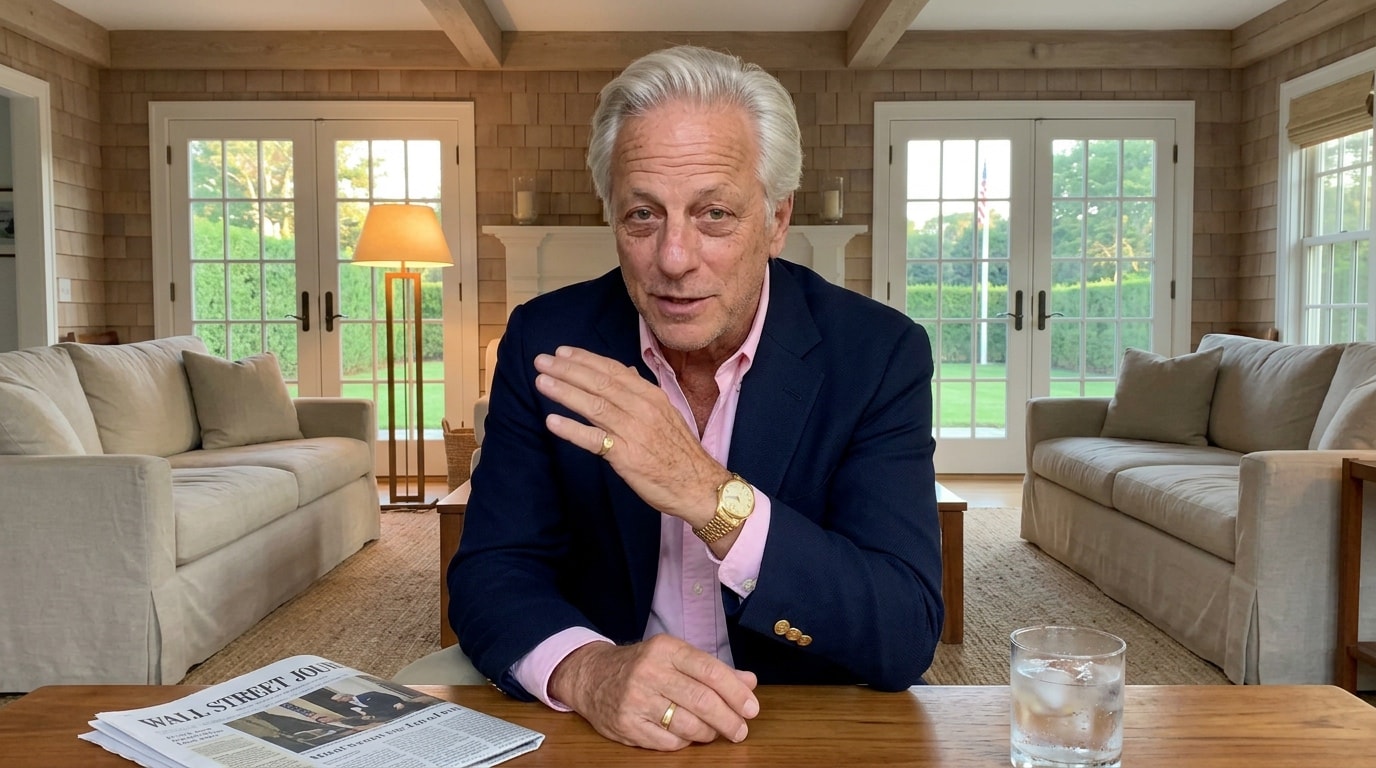
Somebody compliments the watch, and the next sentence leaves your mouth before you can stop it: what it cost, or worse, what a deal you got. The compliment was free. The number you attached to it is the most expensive sentence you will say all month.
Never announce what you paid — for the watch, the car, the kitchen, the trip. A stated price is a public filing: it discloses income, taste, and how much of you is available to be asked for. This is the companion rule to never revealing your salary, and in some ways it is the harder one, because prices are attached to objects people can see and ask about.
What a single price announcement leaks
Say “the watch was $12,000” at one dinner, and here is what the table now holds:
An income estimate. Nobody hears a price in isolation. They divide it into what you must earn for it to make sense — and their estimate errs high, because announced purchases read as the tip of something. One number for the watch quietly publishes a range for the salary.
A judgment file. Half the table thinks you overpaid; the other half is recalibrating what to ask of you. Both halves are now doing arithmetic about you instead of talking with you. You handed a room full of people your number to play with.
An asking price. The friend planning to raise money, the cousin with the venture, the sibling who splits checks — each one just resized what you can spare. A price announced is a family ask pre-approved.
The deal-brag version — “guess how little I paid” — leaks everything the boast leaks, plus one more item: that you need the room to know. Old money’s read on that is immediate and unkind.
The three prices you never say
The appreciating ones — house, land, art. These are the closest thing to net-worth statements in object form. The house price in particular is a full disclosure: income multiple, down payment, borrowing capacity. Even where a deed is public record, the discipline holds — there is a difference between a number being findable and you being its announcer.
The depreciating loud ones — car, watch, jewelry. These are the prices people most want to say aloud, because the object was partly bought to be noticed. Which is the tell: the announcement is the second purchase, made with your privacy instead of your money. Quiet wealth buys the same objects and lets them go unexplained.
The experiential ones — the trip, the wedding, the school. Cost announcements here price your discretionary layer, the most extractable layer you have. “The school runs $40k” tells every listener exactly how much annual slack your household carries — the one figure the code says nobody outside the household should ever hold.
| They ask | The reflex | The quiet answer |
|---|---|---|
| “What did the watch run you?” | The number, or the deal-brag | “It was a good year — I can tell you where, not what” |
| “What did you pay for the house?” | The number and the whole saga | “We love the street — the rest is between us and the bank” |
| “How much was the trip?” | Itemized recap | “Worth it — go; I’ll send you the itinerary” |
| “What does that school cost?” | The tuition figure with a sigh | “Less than the alternative” — and change the subject |
| “I bet that cost a fortune” | Confirm or deny with numbers | Smile: “it cost what it should have” |
Each answer gives the asker the useful half — where, whether, how to get one — and keeps the half that prices you.
Run the purchase before you announce it
The tool below is not about whether you can afford the thing — it is about what announcing its price costs you afterward. Pick the purchase, choose whether the number got said, and read the difference:
What did that sentence cost?
Pick the purchase and whether the price got said out loud. The output is the optionality bill — what the sentence spends that the item never did.
- Everyone at the table can now bracket your discretionary income — a four-figure wrist implies one salary band, five figures another, and they will use the top of the range.
- The next raise, rate, or fee negotiation with anyone who heard it starts from your wrist: "he can afford it" is now the other side’s opening position.
- Relatives and friends resize their next ask to the number — a person who wears $12,000 can obviously spare $2,000.
- The waiting-list story reads as needing the room’s approval, which quietly lowers your standing with the one or two people whose read matters.
The item is bought once. The sentence is paid for at every future negotiation, quote, and ask involving anyone who heard it.
What the discipline buys back
The unpriced person keeps every option: to be generous on his own initiative rather than by extraction, to negotiate without a public floor, to live below his means without an audience keeping score of the gap. That gap — what you could spend but do not — is where wealth actually accumulates, and it only stays yours while it stays invisible. The first rule of quiet wealth is not talking about money; this page is that rule applied to the receipts.
The full audit of what your lifestyle already announces — car, street, vacations, all of it — is in the money privacy playbook, with the leak checklist to run yourself through.
Questions people actually ask
Why shouldn't you tell people what you paid for something?
Because a price is never received as a price. Listeners convert it instantly into an estimate of your income, your judgment, and your capacity to fund their next ask. The announced number keeps working against you long after the conversation ends.
What do I say when someone asks how much something cost?
Deflect with warmth and give them somewhere to go: 'Honestly, I stopped keeping track — but I can put you in touch with where I got it.' It answers the useful version of their question (where, how) without publishing the number.
Is it bragging to mention a good deal?
The deal announcement is the same disclosure wearing camouflage. 'It was 40% off' still tells the room the base price, that you track prices in public, and that you want credit for the purchase. Old money takes the deal and says the item is 'old' or 'was a gift of good luck' — and moves on.
What if the price is public anyway, like a house?
Then your silence is about posture, not secrecy. Anyone can look up the deed; the difference is whether you are the kind of person who announces it. Confirming enthusiasm — 'we love the street' — without narrating numbers keeps you unpriced in the one register that matters: how you handle money in a room.