GUIDE

The mechanics that keep you composed at a table, and the money manners most etiquette guides leave out.

The look-it-up pages: which fork, which glass, and where everything goes.
Before the evening starts: answering the card, and dressing for it.
The tip, the check and the price tag: the three places money shows at a table.
The long reads: etiquette as a system for protecting capital, one scene at a time.
Etiquette is the visible layer. These essays go to the money code underneath it.
Authorities disagree. The Emily Post Institute says loosely to the left of your plate, not on the chair, so food does not reach the seat. Other etiquette trainers say on the chair, to show you are coming back. Either is defensible. At the end of the meal, leave it loosely beside the plate, unfolded.
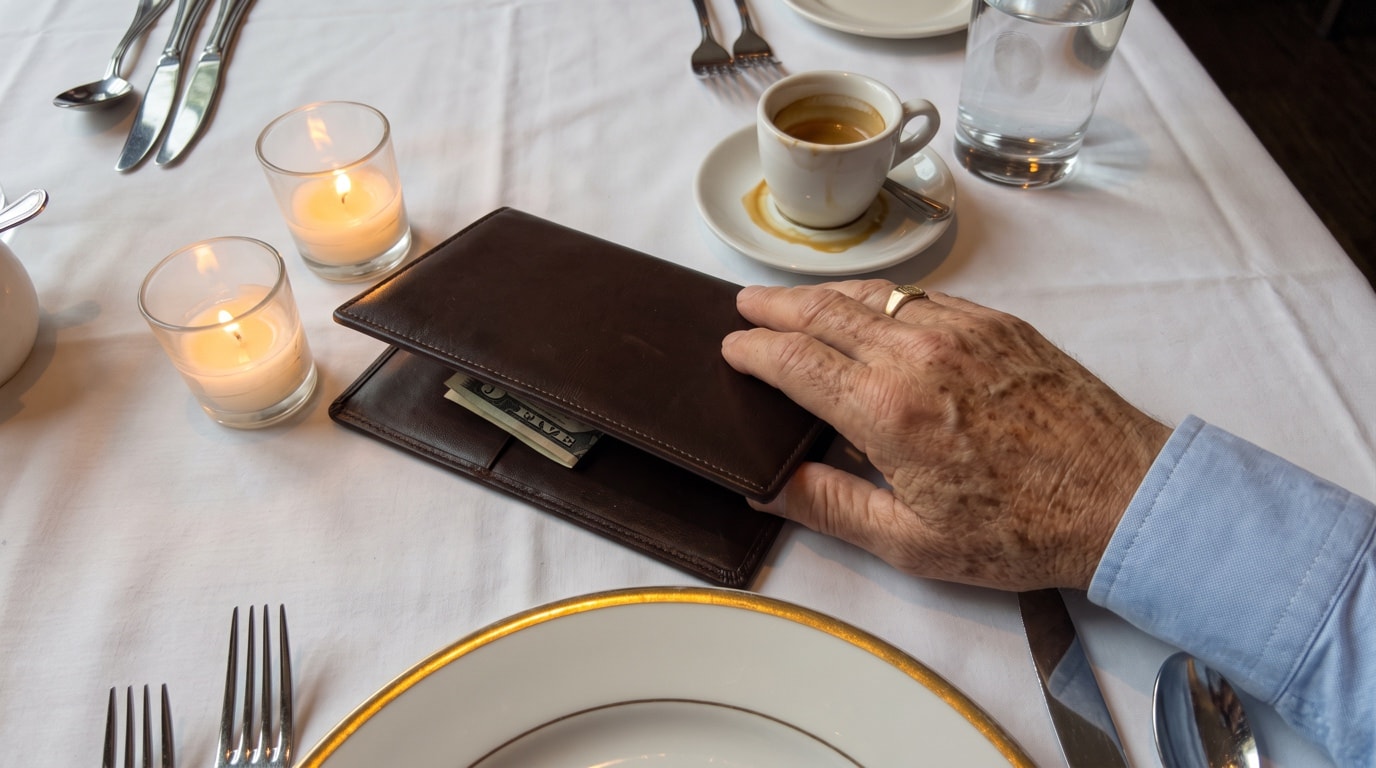
The table manners referenceWhoever issued the invitation hosts and pays, quietly, ideally before the check reaches the table. If you were invited, make one genuine offer and accept the refusal. If nobody invited, split evenly in one sentence, with no item-by-item audit. Generosity between friends travels through the next invitation, not through wrestling for this one.
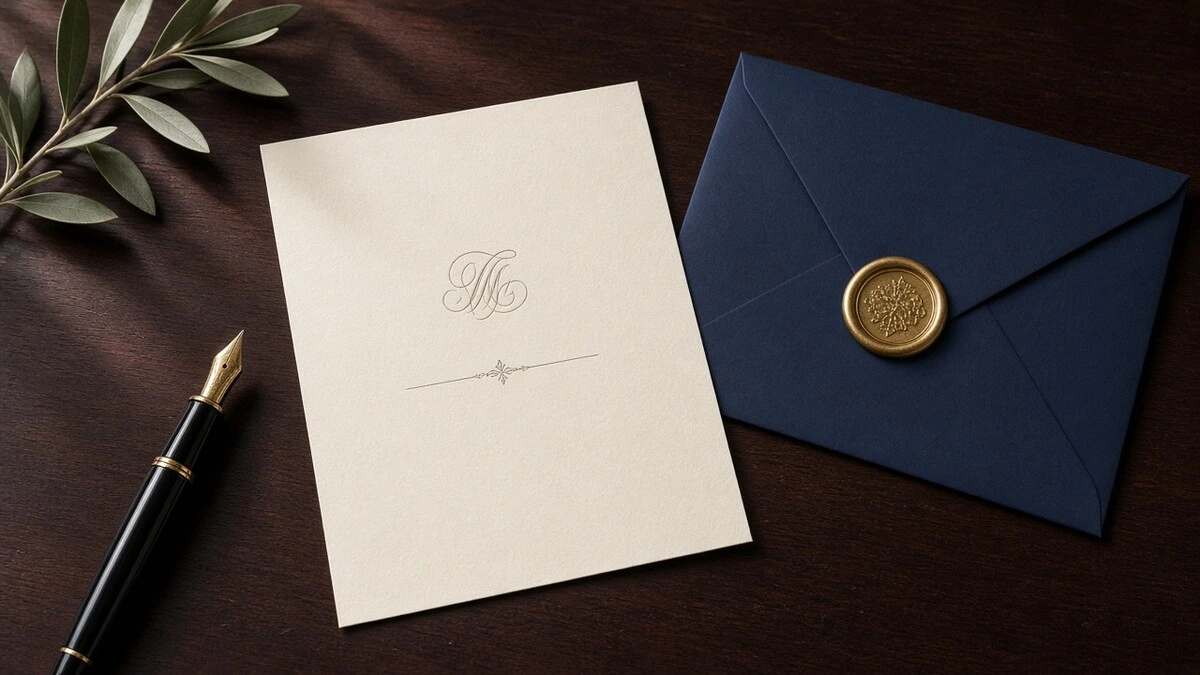
Should you pick up the check?Reply within a day or two, and by the RSVP date at the latest, in three lines: thank the host, say no clearly, and wish the event well. You do not owe a reason; an excuse turns your no into a problem the host can try to solve. A formal written invitation gets a formal written reply.
How to decline an invitationBecause a price is never heard as just a price. Listeners turn it into an estimate of your income, your judgment and your capacity to fund their next request. When someone asks, say you are pleased with it and turn the conversation back to them. Warmth closes the topic; a number keeps it open.
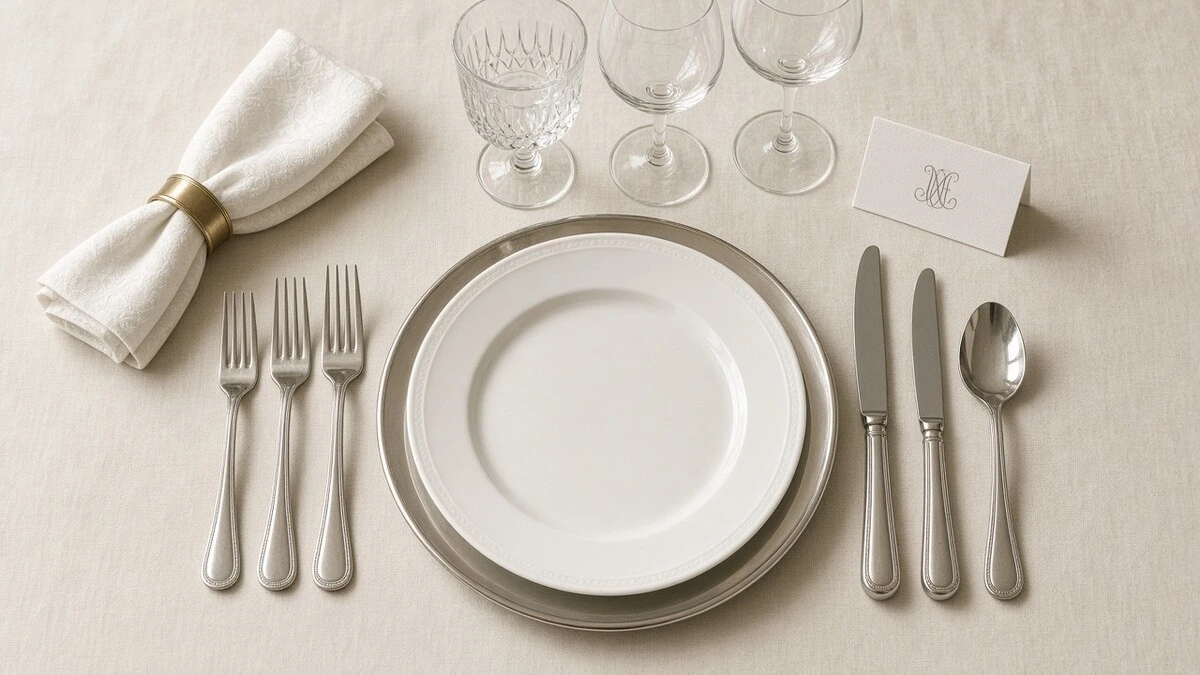
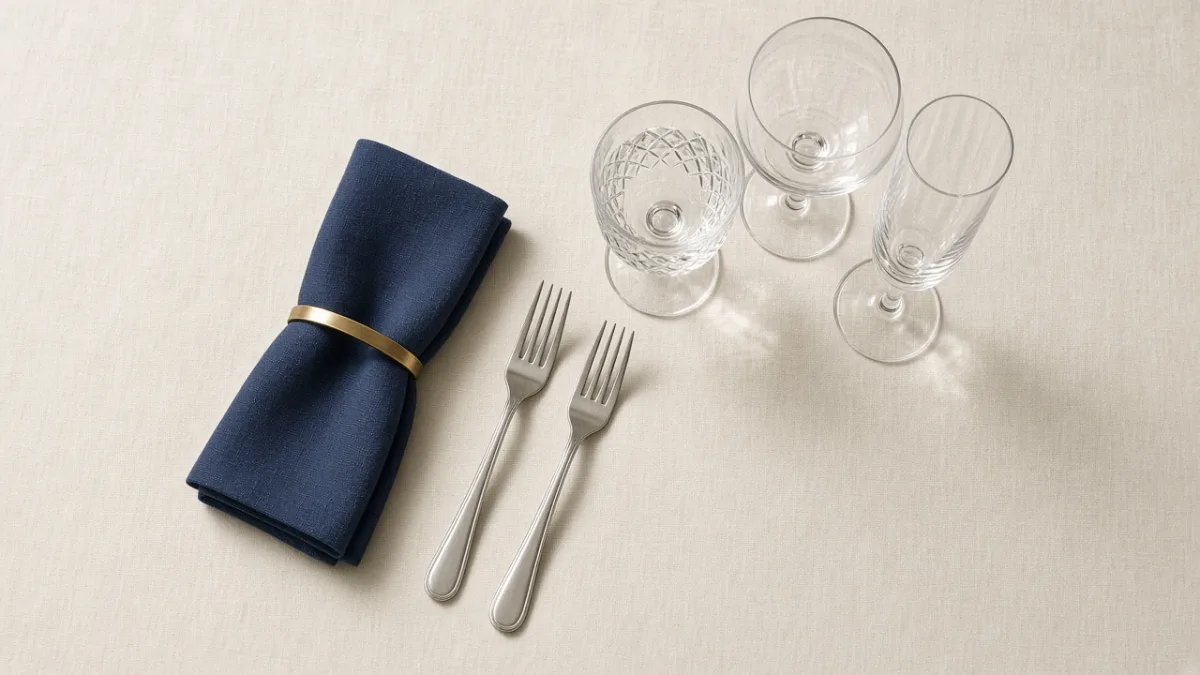
Never announce what you paidThe one furthest from the plate, then work inward one course at a time. The small fork on the far right, if there is one, is for oysters. Dessert cutlery either lies above the plate or arrives with dessert. If you lose track, watch the host and match their pace.
Which fork, which glass