Black tie dress code
What black tie means
Black tie is the most frequently encountered formal evening dress code: dinners, balls, galas and evening weddings. In Britain it may be written as “dinner jackets”, “DJs” or “dress for dinner”; in America, “tuxedos”.[1] Emily Post places it slightly below white tie and above business attire.[3] The phrase is not literal: it means the whole evening outfit, not a suit worn with a black necktie.
Black tie for men
- Jacket: black wool (barathea) or fine herringbone, single- or double-breasted, no vents, silk-faced peaked lapels or a shawl collar, covered buttons.[1] Midnight blue is the accepted alternative to black.
- Trousers: black, matching the jacket, with a single row of braid down each outside leg.[1]
- Shirt: white evening shirt with a marcella or pleated front and double cuffs, worn with studs and cufflinks. Debrett’s specifies a turn-down collar, not a wing collar, and no ruffles.[1][3]
- Bow tie: black and hand-tied; avoid pre-tied ones.[1]
- Waist: a cummerbund or a waistcoat, both optional, never both together.[1]
- Shoes: black patent or highly polished lace-ups with black silk or dress socks.[1][3] Emily Post adds: no gloves.[3]
A velvet smoking jacket is the host’s privilege at home; Debrett’s says it is not right for a guest when black tie is printed on the invitation. A long black necktie with a dinner jacket, sometimes called “Hollywood black tie”, would look unsuitable at most formal private events in Britain.[1]
Black tie for women
There is more latitude here, and the authorities do not agree on length (see where the authorities disagree).
- Emily Post: a floor-length evening gown, a dressy cocktail dress, or “your dressiest little black dress”.[3]
- Debrett’s: long, “or at least not very short”; a fitted cocktail dress to just below the knee in silk, crêpe or chiffon is an option; palazzo-cut evening trousers are acceptable; sheer or black tights; fine or costume jewellery but not a tiara.[1]
- Vogue: “we can generally assume that ‘black tie’ equals ‘long’”, in velvet, chiffon, silk or lace.[5]
The dress does not have to be black, and black alone does not make an outfit formal enough.[1] Rewearing a dress is not a faux pas.[5]
Black tie optional, preferred and invited
“Black tie optional” gives guests a choice: men are asked to wear a tuxedo but may wear a dark suit with a white shirt and conservative tie; women may wear a gown, a dressy cocktail dress or dressy separates.[3]
The Black Tie Guide reads it as a signal that the hosts will be in black tie and invite you to join them. It recommends a black, charcoal or deep navy suit, and warns against pairing a suit with a tuxedo shirt, or a black suit with a black bow tie.
It is also the most criticised code. GQ calls it “the worst possible dress code” and advises erring formal; Vogue calls it “a relatively new phenomenon”. “Black tie preferred” and “black tie invited” are read differently by different sources; treat them as a stronger request than “optional”.
Creative black tie
Emily Post describes creative black tie as “a black-tie foundation with room for some creativity and flair”: a tuxedo with a coloured or patterned bow tie and cummerbund, or a black shirt.[3] Debrett’s groups it with “relaxed” or “bohemian” black tie, where a velvet smoking jacket or a glamorous waistcoat is fair game.[2] What it does not mean is a business suit dressed up to pass as a tuxedo.
Warm-weather black tie: the white dinner jacket
Emily Post allows a white dinner jacket with black trousers “in summer, in the tropics, or on a cruise”.[3] The Black Tie Guide limits it to the tropics year-round and to American summers, typically at open-air country club and yacht club parties, and prefers ivory or off-white to bright white. Debrett’s notes that white dinner jackets are “not usually [worn] in Britain, even in the summer.”[1]
Where black tie came from
In 1865 the Prince of Wales, later Edward VII, asked his tailor Henry Poole to cut a short coat for informal dinners at Sandringham.[7] How it crossed the Atlantic is disputed.
The Tuxedo Club credits member James Brown Potter, who visited Sandringham in 1886; the Village of Tuxedo Park credits Griswold Lorillard, who wore a tailless coat to the Tuxedo Club’s autumn ball that October; Henry Poole thinks the club’s founders had copied the Prince twenty years earlier.[7]
The word “tuxedo” was in print by 1888. Midnight blue arrived in the 1920s, championed by the Prince of Wales who became the Duke of Windsor. Under artificial light it reads richer than black, which can take on a greenish cast.
White tie
White tie, also called full evening dress or “tails”, is the most formal code and is rare today: certain royal and state occasions, livery dinners, some balls and formal evening weddings. It will always be stated on the invitation.[1] In the US it appears at inaugural balls, state dinners and Le Bal des Débutantes; the 2022 Met Gala used it.
White tie for men
A black tailcoat with silk-faced lapels, worn open; matching trousers with braid; a white marcella shirt with a stiff detachable wing collar, studs and double cuffs; a low-cut white waistcoat; a thin white hand-tied bow tie; black patent or highly polished shoes.[1] Emily Post adds braces and white or grey gloves.[4]
White tie for women
A full-length evening gown; “shorter dresses or trousers, no matter how smart, are not acceptable.” This is the occasion for the finest jewellery, including tiaras, which are traditionally worn first by brides and never by young girls.[1]
Long gloves are traditional but no longer compulsory at many events. They are worn arriving, in the receiving line and dancing, and taken off to eat, even a canapé, then rested on the lap under the napkin.[1]
Morning dress (formal daytime)
Morning dress is the formal day code: weddings, formal memorial services and the Royal Enclosure at Ascot. Debrett’s says it should never be specified for an event starting after 6 pm. Men wear a black or grey morning coat, grey or striped trousers, a waistcoat and a tie; women wear smart daywear, usually with a hat.[1]
At Royal Ascot’s Royal Enclosure the rules are written down: morning dress in black, grey or navy with a top hat for men; for women, hems just above the knee or longer, straps at least an inch wide, and a hat.[8] In North America, formal day clothes have largely disappeared since the Second World War.
Cocktail attire
GQ places cocktail between the comfort of business casual and the formality of black tie. At its formal end it means a dark suit, white shirt and dark solid tie. For women it means a knee-length, tea-length or midi dress, or a tailored jumpsuit, rather than a gown.
Debrett’s calls the British versions “smart frocks” or “party dress”.[2] The original cocktail hour ran from six to eight in the evening. Our full guide to cocktail attire covers day versus evening, weddings, and how it differs from semi-formal.
In current American usage, semi-formal sits between office wear and formal wear. Men wear a dark business suit and tie; women a short afternoon or cocktail dress, a little black dress, a long dressy skirt and top, or dressy separates. After 6 pm, err on the formal side.[4]
Be careful with older or European invitations: in the traditional classification black tie itself was called semi-formal, with white tie the only “formal” code.
Emily Post’s business formal is a suit, “the darker the suit, the more formal”, with a dress shirt and conservative tie for men, and a suit, business dress or dress with jacket for women.[4]
British invitations call this “lounge suits”, a phrase Debrett’s says is only seen on invitations. The shirt should have a turn-down collar, not a button-down, with the top button done up under the tie. In the evening, women wear a smart or cocktail dress with sleeves or a jacket.[1]
Smart casual
Debrett’s calls smart casual “by far the most common of all dress codes” and also “the hardest dress code to interpret”.[1][2] At its formal end, men wear a jacket or blazer, chinos or flannels (not jeans), a collared shirt and smart shoes; women a smart day dress with a jacket. At its informal end, clean, dark jeans can pass.[1]
Our guide to smart casual goes item by item: jeans, polos, sneakers, shorts.
Business casual, dressy casual and casual
Business casual is an office code and, in Emily Post’s words, “pretty ambiguous”: slacks or khakis with a dress shirt, blouse or polo; a sport coat optional; a dress for women. Always check your company’s policy first.[4] Sandals, workout clothes and anything torn or worn thin stay out. Jeans are still discouraged or considered casual in many business settings.
Dressy casual, for after-work events, fundraisers or a good restaurant, means a sport coat or blazer with slacks for men, and a dress, skirt and dressy top, or nice jeans with a dressy top for women.[4] Casual still means “clean and professional”: good jeans or khakis, plain T-shirts without slogans, polos, and nothing baggy from around the house.[4]
Country club dress codes
There is no single country club code: each club publishes its own, and the rules change by room and by hour. Collared shirts tucked in, tailored trousers or Bermuda-length shorts, and no athletic wear in the clubhouse are common threads. Dining rooms often tighten after 5 or 6 pm, with jackets encouraged or required. We compared the published rules of sixteen clubs in our country club dress code guide.
How to read an invitation
Where the dress code goes
Debrett’s puts the dress code in the bottom right-hand corner, for example “Black tie” or “Smart casual”, with the nature of the event (“Dinner and dancing”) above it. “Decorations” beneath the dress code on a private invitation implies a member of the Royal Family is expected.
Emily Post’s advice for weddings is to leave attire off the wedding invitation itself and, if necessary, write “Black tie” in the lower right of the reception invitation. Modern wedding guides instead put the dress code on a details card and the wedding website.
What the card itself tells you
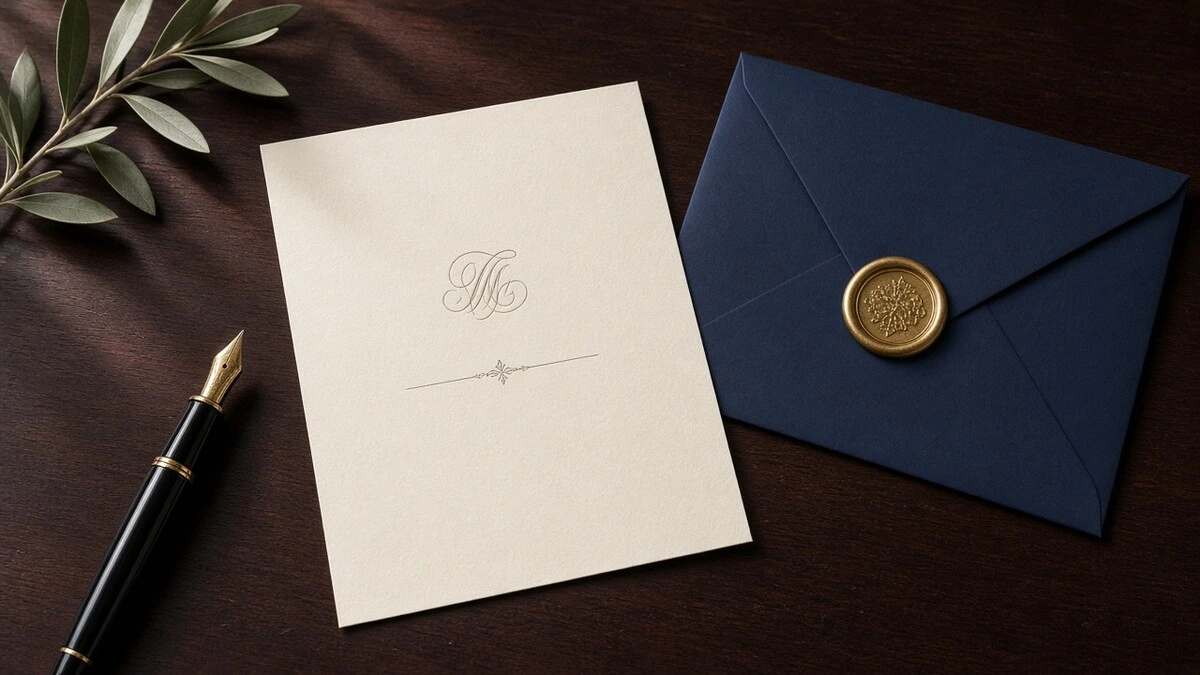
“A printed invitation suggests a smarter event than a text or email.” City events tend to be more formal than country ones, and older or more traditional hosts more formal than younger ones.[1] Vogue reads thick card stock, a wax seal and calligraphy as a formal evening; a text message as a relaxed one.[5]
When there is no dress code, or a vague one
For weddings, Emily Post says the invitation and the time of day are your best guide, along with the religious setting and local custom.[6] Fanciful codes such as “razzle dazzle” or “denim and diamonds” can be acknowledged with accessories alone; “dress to impress” simply means under-dressing is not an option.[2]
And “‘Come as you are’ rarely means what it says.”[1] When in doubt, ask the host; Vogue suggests asking what they plan to wear.[5] If you would rather not go at all, see how to decline an invitation.
Daytime vs evening
Evening wear traditionally starts at 6 pm. One school of thought says 6 pm or dark, whichever comes first. That is why morning dress is the formal daytime code and white tie and black tie are evening codes.[1]
For weddings, Emily Post’s formal daytime guidance is a dark suit for men and a cocktail or dressy afternoon dress for women; formal evening means a tuxedo (required if the invitation says black tie) and a long or dressy cocktail dress.[6] For cocktail and semi-formal events, lighter colours and fabrics suit daytime, and darker, richer ones suit the evening.
UK vs US: the same codes, different rulebooks